Charyn Canyon Facts, Geology and Wildlife
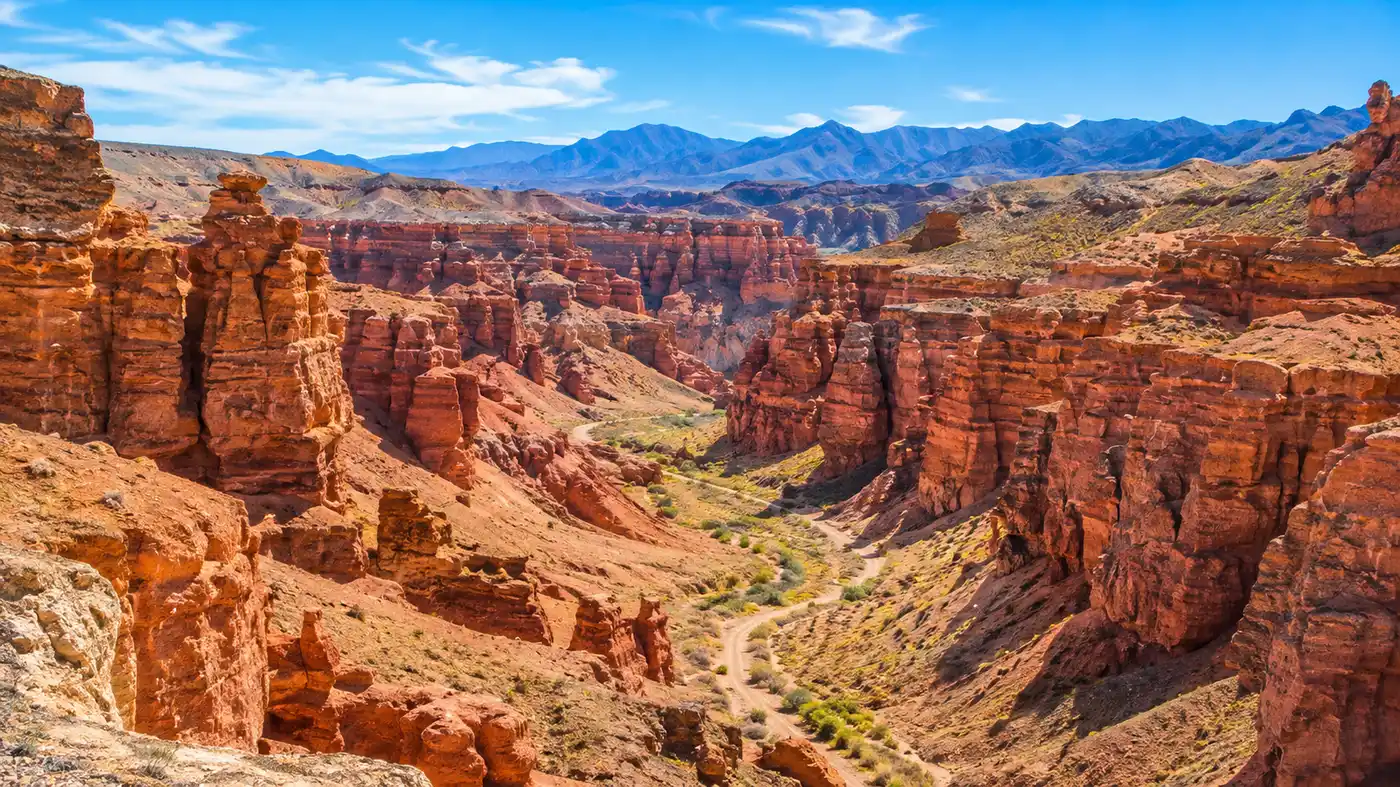
You smell the dust before you even reach the rim. Out here in the Almaty region, the steppe stretches flat and bleached under an immense sky until the earth simply tears wide open without warning. Down below sits a maze of rusted red towers, cracked gullies, and ancient gravels. People love digging into charyn canyon facts before heading out from the city, mostly trying to figure out if this place is worth a grueling three-hour drive across broken asphalt. It is. But not for the reasons people usually parrot online.
Most guidebooks call it Kazakhstan's mini Grand Canyon, sell you a day trip, and leave it at that. That comparison misses what makes this place strange and compelling. It is smaller than its American cousin, sure, yet Charyn holds an ancient relic forest that survived the last ice age, bizarre wind-sculpted spires that feel almost architectural, and an ecosystem where desert reptiles share shade with rare mountain raptors. Understanding how this dry gorge came to be changes how you walk along its dry floor.
Book your charyn canyon experience:
Charyn Canyon Formation and Geologic History
The rocks under your boots tell a violent story. To understand how charyn canyon formation actually unfolded, you have to wind the clock back around 12 million years to the Miocene epoch. Central Asia was shifting. The collision between the Indian tectonic plate and Eurasia was shoving the northern Tian Shan mountains upward, creating massive inland drainage systems. A giant sedimentary basin formed right here, catching layers of volcanic debris, sand, clay, and river gravels washed down from the rising peaks.
For millions of years, these deposits hardened into deep layers of red and orange sandstone. Then, water found a path. The Charyn River, fed by melting glaciers up in the Ketpen and Kungoy Alatau ranges, started slicing through the soft sedimentary layers like a wet wire through block cheese. Wind, sudden flash floods, and brutal winter freezes did the rest. Frost wedging pushed vertical fissures apart, shearing massive slabs off the cliff faces and leaving behind the weird towers we see today.
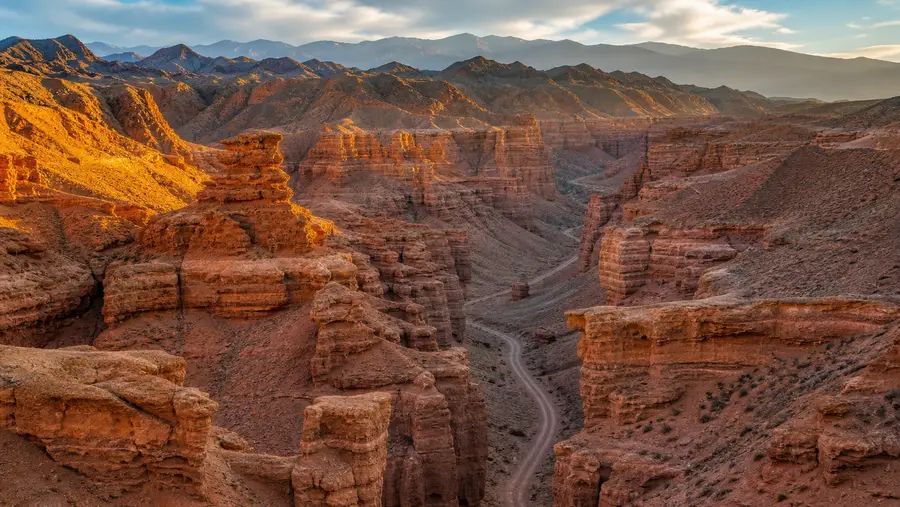
If you take time on the hiking trails through the Valley of Castles, look closely at the canyon walls. You will see clear horizontal striping. Those stripes are distinct geologic chapters:
- Deep red base layers: Ancient river mud and iron-rich silt deposited in warm, slow-moving prehistoric floodplains.
- Coarse gravel bands: Sudden gravel deposits left by catastrophic glacial outburst floods or mountain torrents millions of years ago.
- Pale cap rock: Drier silt and windblown dust cemented over thousands of dry summers, protecting the softer mudstone underneath from washing away immediately.
Geologists consider the charyn canyon formation one of the finest natural laboratories in Central Asia for study of continental sedimentary erosion. The gorge keeps changing, too. Every spring, heavy rains carve out tiny new side gullies, slowly toppling hoodoos that stood for centuries and exposing fresh bands of brick-red clay.
Note: Sandstone pinnacles here are notoriously fragile. Never climb the canyon walls or venture off designated walking paths, because the weathered clay gives way under foot with zero warning.
Grand Canyon vs Charyn: Sizing Up the Little Brother
Almost every brochure insists on using the phrase charyn canyon grand canyon in the same breath. Even French tourists leaning over the rim rail can be heard exclaiming about a canyon charyn comme celui d'arizona. There is definitely a visual kinship. Both cuts in the earth display fiery bands of crimson and ochre, both were carved by persistent river systems, and both leave you feeling miniature against the sky. But the direct grand canyon vs charyn comparison falls apart if you expect equal size.
Arizona's canyon is a continental monster. It runs 446 kilometers long and plunges over 1,800 meters down into dark Precambrian basement rock. Charyn measures about 154 kilometers in total length along the river, but the tourist corridor known as the Valley of Castles spans just under 3 kilometers. Its depth tops out around 200 to 300 meters. You can easily walk Charyn from rim to riverbed and back in two hours without gasping for breath, something you definitely cannot do in Arizona.
| Feature | Charyn Canyon (Kazakhstan) | Grand Canyon (USA) |
|---|---|---|
| Total Length | 154 km (main system) | 446 km |
| Maximum Depth | Approx. 300 meters | 1,828 meters |
| Rock Formation Age | 12 to 25 million years (Tertiary) | Up to 1.8 billion years (Precambrian) |
| Primary Sculpting River | Charyn River | Colorado River |
| Annual Visitors | Approx. 45,000 to 60,000 | Around 4.7 million |
The scale might be humbler, but the intimacy here is unmatched. At Grand Canyon, you mostly stare into a blue haze from paved railings miles away from the water. At Charyn, you touch the cold, fast-moving glacier melt of the river at the trail end, sit on driftwood, and run your fingers along dry silt deposits. There are no guardrails choking the hiking track, no shuttle bus lines, and on a Tuesday morning in October, you might share the entire valley with three other people and a stray hawk.
Flora and the Ancient Sogdian Ash
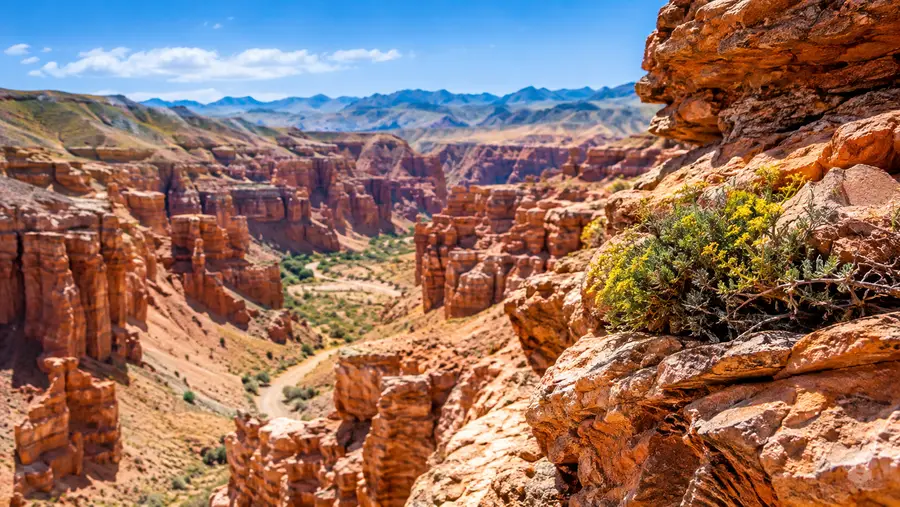
The desert looks dead from a highway seat. Once you descend toward the riverbed, the plant life turns surprisingly complex. Kazakh naturalists will gladly point out every unique charyn canyon растение (plant) clinging to life inside the rocky microclimates. The gorge traps pockets of shade, and the subterranean water table fed by the river creates narrow ribbons of oasis where vegetation thrives against all odds.
The botanical crown jewel of the national park is the Sogdian Ash grove (Fraxinus sogdiana). Located roughly 30 kilometers downstream from the main tourist trail, this grove covers several hundred hectares and holds trees that have survived for four centuries. Sogdian ash is a genuine relic species. When glaciers crept south during the last great ice age, the deep, sheltered cuts of Charyn Canyon held pockets of warmer air and groundwater. The trees took refuge here, surviving environmental catastrophe while forests across northern Eurasia died off.
Aside from the famous ash grove, plant enthusiasts will spot thorny barberry bushes, tough saxaul wood with roots that bore dozens of meters downward for water, and sprawling tamarisk shrubs whose pink flowers explode in late spring. Wild desert garlic sprouts along moist gravel bars near the water. Even the cracked dirt holds lichens that stay completely inert through months of zero rain, snapping back to green within twenty minutes of an afternoon storm.
Book your charyn canyon experience:
Mammals, Birds, and Wolves of Charyn Canyon
People visit for the rocks, but patient travelers see plenty of wildlife. The terrain looks barren, yet dozens of hardy mammals charyn canyon claims as residents manage to survive between cold winters and 40-degree summer afternoons. Gazelles, foxes, and mountain-dwelling ungulates roam these ridges, using the jagged cliffs for cover.
Are there wolves charyn canyon travelers need to worry about? Grey wolves (Canis lupus) do live on the surrounding Ili Basin plains and occasionally hunt through the upper washes in winter. Locals talk about them, and shepherds watch their flocks closely when snow blankets the steppe. You will almost certainly never see one. Wolves avoid humans with paranoid efficiency, keeping well clear of the parking lots and well-trodden paths. What you might actually spot at dawn are corsac foxes, small-eared pale canines that hunt desert jerboas and pikas among the rocks.
Pro tip: Bring a pair of 8x or 10x binoculars and scan the canyon rims early in the morning. Siberian ibex sometimes graze the top edges before the tour buses pull in from Almaty.
Birdlife is where Charyn truly shines. The thermal air currents swirling up from the baked canyon floor make it an eagle highway. Golden eagles, steppe eagles, and long-legged buzzards circle on updrafts, watching for ground squirrels. If you get lucky near the river, you might hear the harsh cry of the blue rock thrush or spot a wallcreeper darting along vertical stone seams looking for spiders.
Surprising Charyn Canyon Facts to Keep in Mind
There is more history buried in this stone than simple geography lessons suggest. For centuries, nomadic tribes used these canyons as natural pens for horses and sheep during brutal blizzard seasons, shielded from bitter northern winds by two-hundred-meter cliffs. If you are planning to reach the park independently, checking out an Almaty to Charyn Canyon transport guide will save you plenty of headaches on the road.
A few practical details make exploring the national park far more rewarding when you understand what lies around you:
- Protected status: The area became Charyn National Park in April 2004, covering over 127,000 hectares to safeguard both the canyon system and the ash grove.
- Multiple distinct canyons: The popular Valley of Castles is just one section; the park also includes the Yellow Canyon (Moon Canyon), the Temirlik Canyon, and the red cliffs of Bestamak.
- The river speed: The Charyn River looks inviting after a hot walk, but its current is exceptionally treacherous and glacial cold; swimming is strictly forbidden and genuinely dangerous.
- Film history: The wild, reddish badlands have served as the backdrop for numerous Kazakh and Soviet historical films depicting nomad wars.
My first time walking through, I spent forty minutes just watching the shadows shift on a single pillar called the "Witch's Tower." As the sun dropped behind the western rim, the sandstone shifted from pale yellow to blood orange, then finally to a dull, bruised purple. It felt less like visiting a park and more like standing inside a ruined cathedral whose roof fell in millions of years ago.
Frequently Asked Questions about charyn canyon facts
How old is Charyn Canyon?
The sedimentary rock layers began accumulating roughly 25 million years ago, but the canyon itself began cutting deep into the landscape around 12 million years ago during the Miocene epoch as tectonic shifts accelerated river erosion.
Can you see wolves in Charyn Canyon?
While grey wolves live on the vast steppe lands around the canyon, they are reclusive and stay far away from populated tourist trails. Sightings by visitors are practically unheard of during daylight hours.
What makes the Sogdian Ash grove unique?
The Sogdian ash trees in the canyon are rare living fossils that survived the Quaternary glaciation period thanks to the canyon's deep, protected microclimate and consistent groundwater supply.
Quick Reference
- Age: Around 12 million years old
- Total length: 154 kilometers along river
- Canyon depth: 150 to 300 meters
- Distance from Almaty: 215 km east
- Park status: Established in April 2004
Book your charyn canyon experience:
The Bottom Line
Charyn Canyon doesn't need to be compared to the American Southwest to justify its reputation. Between the ancient Sogdian trees along the water, the strange geology of the Miocene lakebed, and the silent foxes roaming the upper rims at dawn, it stands firmly on its own merits. Pack plenty of drinking water, leave the high-heeled shoes at the hotel, and take your time walking all the way to the water's edge.
Read more about charyn canyon.